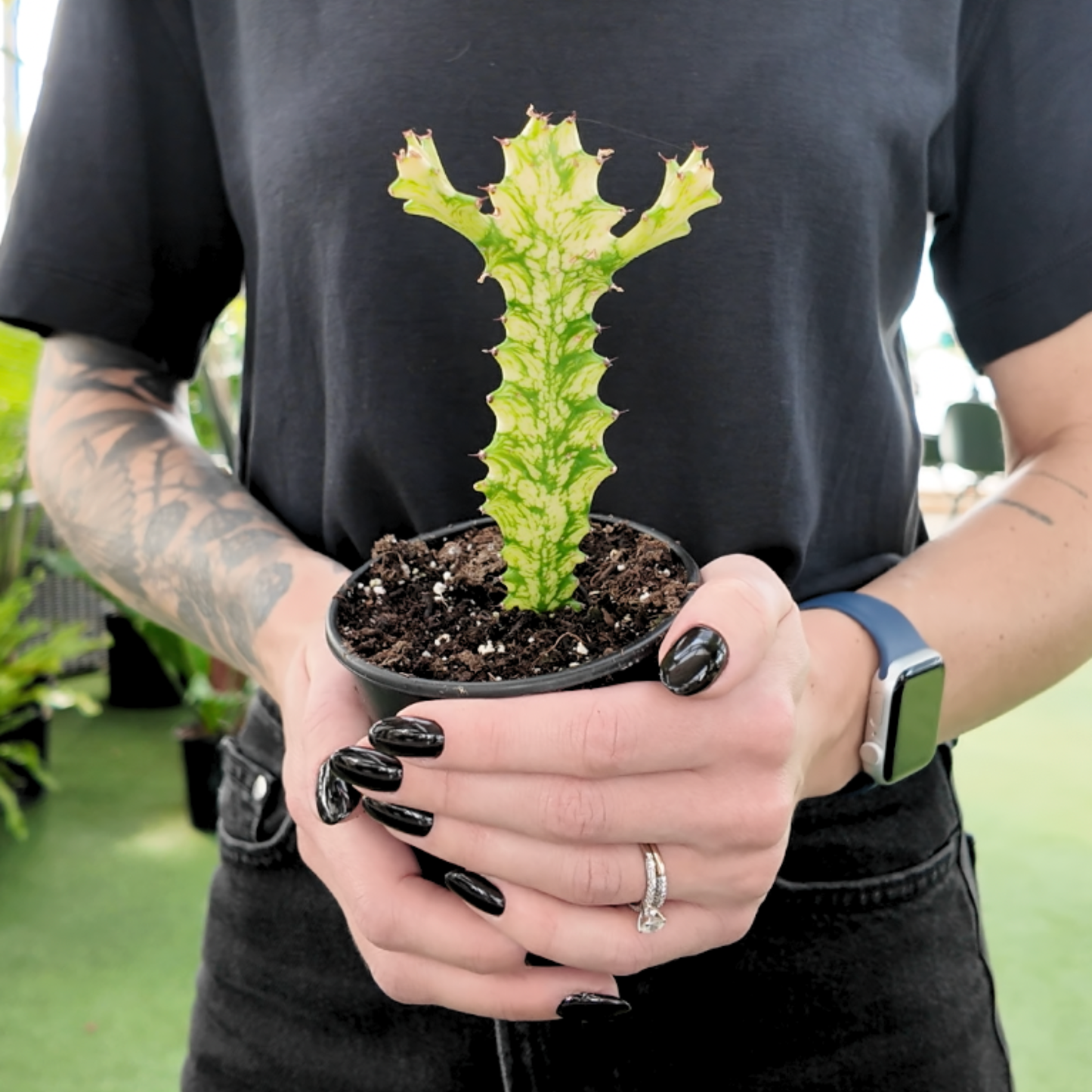
Variegated Euphorbia trigona (African Milk Tree)

Variegated Euphorbia trigona (African Milk Tree)

Variegated Euphorbia trigona, commonly known as the Variegated African Milk Tree, is a striking architectural plant admired for its tall, upright stems and bold cream, pale yellow, and green variegation. Although often mistaken for a cactus, this plant is a Euphorbia and features angular stems lined with small thorns and occasional leaves along the ridges. Its dramatic vertical growth and high-contrast colouring make it a standout feature plant for modern interiors.

Native to Central Africa, Euphorbia trigona is adapted to bright light and dry conditions. The variegated form grows more slowly than the standard green variety but offers enhanced visual interest. With proper placement and minimal disturbance, this plant develops strong structure and long-lasting appeal as it matures.

Sizing Description:

Small - 4"/ 10cm Diameter

Regular price $24.99
Regular price Sale price $24.99
Sale Sold out
Size

Choose a pot for your plant

Sun Requirements ▾

Bright light is essential for Variegated Euphorbia trigona. It thrives in bright indirect light and can tolerate some gentle direct sun, particularly in the morning. Strong light helps maintain compact growth and vibrant variegation. Low light conditions may cause stretching and reduced colour contrast.

Watering Instructions ▾

Watering should be done only when the soil has dried out completely. Variegated Euphorbia trigona is highly drought tolerant and sensitive to overwatering, which can lead to root rot. Water thoroughly and allow all excess water to drain away. During the winter months, watering should be reduced significantly as growth slows.

Care Tips ▾

Variegated Euphorbia trigona prefers a bright, warm environment with good airflow and stable conditions. It performs best in a fast-draining cactus or succulent soil mix that prevents excess moisture from lingering around the roots. This plant does not tolerate cold temperatures or prolonged humidity and should be kept away from drafts. Because the stems contain a milky sap, care should be taken when handling, pruning, or repotting.
View full details