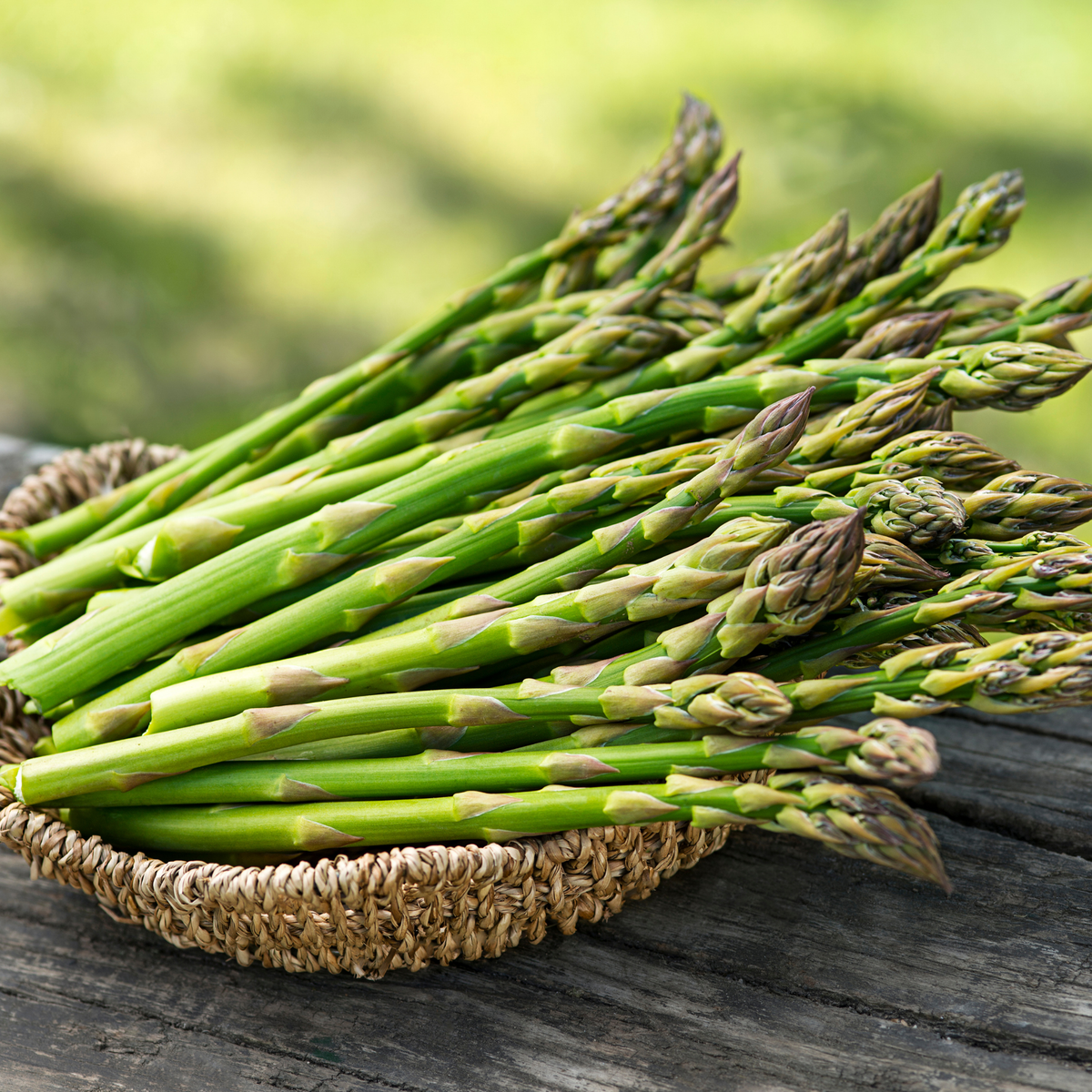

Mary Washington Asparagus (Asparagus officinalis ‘Mary Washington’)
Mary Washington Asparagus (Asparagus officinalis ‘Mary Washington’)
Mary Washington Asparagus (Asparagus officinalis ‘Mary Washington’) is a classic heirloom perennial vegetable prized for its tender green spears, dependable productivity, and exceptional cold hardiness. This long-lived asparagus variety produces delicious edible shoots each spring and can remain productive in the garden for many years once established.
The upright fern-like foliage emerges after harvest and creates soft ornamental texture in vegetable gardens and edible landscapes throughout summer. Mary Washington is valued for its strong disease resistance, reliable spear production, and ability to tolerate colder Prairie climates. The tender spears are excellent for steaming, roasting, grilling, and fresh spring cooking.
In Alberta, Mary Washington Asparagus performs best in full sun with fertile, deeply worked, well-drained soil rich in organic matter. Because asparagus is a long-term perennial crop, proper site preparation is important before planting crowns. Once established, plants become highly productive and return reliably each spring with increasing harvests year after year.
Couldn't load pickup availability
Sun Requirements ▾
Watering Instructions ▾
Care Tips ▾
Share